
Skip to content
Case study · AdSpyderLatest2023 to 2026

AdSpyder.
Transforming a search tool into intent-driven ad intelligence

Role
Senior Product Designer
Timeline
2023 to 2026
Platform
Web app
Type
SaaS
Problem

Marketers came with a business question, but AdSpyder handed them a search box: no competitor context, dead ends when data was missing, and campaigns optimised by hand. Paid users fell to about 5.

What I did

Rebuilt the product around intent: guided research projects, competitor evidence before tracking, recovery paths for empty results, and an Agent Hub that watches campaigns.

Result
3×Monthly sign-ups, Nov 2023 to Aug 2024
+25%Retention from AI analytics

A clearer starting point, fewer dead ends, and one place to optimise campaigns. Sales and outreach also contributed to growth.

AdSpyder

Introduction

AdSpyder helps marketers research competitor advertising across 15+ platforms.

When I joined, it was modelled on Meta's Ad Library. Users were dropped into an open search box, and the more useful parts, competitor intelligence and tracking, were hard to find.

Paid subscriptions had fallen to about 5. My goal was to improve activation and retention by turning a search-first ad library into an intent-driven competitive intelligence product.

My role

I was the sole product designer for AdSpyder, leading the end-to-end redesign across research, UX, UI, prototyping and post-launch iteration, with stakeholders, engineering and the data team.

Team

Stakeholders, engineering and the data team

Constraint

The data team had limited crawl capacity, so some searches returned little or no data.

The problem

Marketers came to AdSpyder to understand their competitors and improve their campaigns. Instead, the product made them do the work: build their own searches, judge competitors without context, hit dead ends when data was missing, and optimise every campaign by hand.

The evidence
  • Paid subscribers had fallen to about 5
  • Users often hit unsuccessful searches
  • Competitor recommendations lacked context
  • No recovery path when data was missing
  • The product depended on data coverage across 15+ platforms

Product audit plus interviews with about 10 active users and 3 to 4 churned users: why they came, where they struggled, why searches failed, why they left.

Before · Search
Problem 1

Search-first complexity.

Users landed in an Ad Library search and had to learn platforms, keywords, filters and matching logic before getting any value.

Impact. High cognitive load and poor feature discovery.
Before · Competitors
Problem 2

Limited context around competitor discovery.

The product said ‘Here is a competitor. Track them.’ It never explained why they mattered.

Impact. Low confidence, so few users tracked competitors.
Before · No results
Problem 3

No data meant a dead end.

Some searches returned nothing, with no way to request fresh data or try something nearby.

Impact. Limited data → failed search → frustration → churn.
Google Ads · Keyword optimisation
Problem 4

Manual optimisation, every time.

After connecting their Google Ads account, marketers had to review and optimise keywords, locations, audiences, creatives and click fraud separately, again and again.

Impact. Campaign optimisation depended on constant manual checking.
How I got there
1Research

Product audit and interviews with about 10 active and 3 to 4 churned users.

2Structure
Information architecture, iteration 3, organised around the project.
3Iterate

My first setup flow asked for everything before showing anything. The final one asks for the minimum, shows value, then asks for more.

Goals

What the redesign
had to achieve.

Business goals

  1. 1
    Improve activation.Move new users from sign-up to meaningful activity faster.Indicator: sign-up → project creation
  2. 2
    Deepen competitive intelligence engagement.Move users from passive searching to ongoing research and tracking.Indicators: keywords tracked, competitors tracked, research activity
  3. 3
    Improve retention.Give users reasons to return, especially after a failed search or when fresh data arrives.Indicators: repeat research, tracking adoption, return after crawl completion

User goals

  1. 1
    Get to relevant insight faster.Set up my business and research goal without learning how AdSpyder's search works.
  2. 2
    Find competitors that matter.Know not just who my competitors are, but why they're relevant.
  3. 3
    Never hit a dead end.When the data isn't there, still have something useful to do next.
  4. 4
    Spend less time on manual optimisation.Let the product watch my campaigns and tell me what needs attention.
Solutions

Four changes,
one direction.

SOLUTION 01

Intent-driven project creation

I replaced the open search entry with guided project creation, so the product learns the user's business and goal before asking them to search.

BeforeSign upAd LibrarySearch
AfterSign upGoalDomainBusiness contextKeywordsCompetitorsResearch
  1. 1Primary goal
  2. 2Keyword suggestions
After · Project setup
Why it's better
Lower cognitive load. Users don't need to understand the whole product to start.
Better personalisation. Domain, goals, keywords and competitors shape what they see.
Faster path to value. Setup leads to research, not an empty search box.
Better business intelligence. Every project is a structured signal of the markets users care about.
FROM“What do you want to search?”
TO“What are you trying to understand?”
SOLUTION 02

Contextual competitor intelligence

I designed competitor discovery around evidence → relevance → action, so every recommendation explains itself before asking for a commitment.

Keyword overlapAdvertising activityMarket activityPlatform activityRecent ad changesCompetitive patterns
  1. 1Impact badge
  2. 2“Bidding on 38 of your keywords”
  3. 3Intelligence preview
After · Competitor relevance
Why it's better
More confidence. Users see why a competitor was recommended.
Better decisions. Signals show whether a competitor is worth tracking.
More useful intelligence. It goes past who a competitor is, to how they behave.
Higher actionability. Discovery leads straight into tracking and research.
FROM“Who is this competitor?”
TO“Why is this competitor relevant to me?”
SOLUTION 03

Turning no data into a recovery experience

I treated an empty result as a starting point, with two recovery paths instead of a dead end.

Track the market

Request a crawl and get notified when new data arrives.

Explore adjacent keywords

‘Running injury prevention’ leads to running shoes, marathon shoes, sports sneakers and shock absorption shoes, each with its ad count.

  1. 1“Track this market”
  2. 2Adjacent keywords with ad counts
  3. 3Notification channels
After · No data
After · Market watch
Why it's better
No more dead ends. There's always a meaningful next action.
Better discovery. Related keywords reveal adjacent opportunities.
Fresh data on request. Users ask for a crawl instead of assuming the data is missing for good.
A retention loop. Track a market, come back when data lands.
FROMNo data → leave
TONo data → alternative → track or explore → return
SOLUTION 04

Agent Hub: one place where agents look after the campaigns

Instead of optimising each area by hand, marketers get one Agent Hub where purpose-built agents watch their connected Google Ads campaigns and bring the actions that matter to one place.

Opportunities
Keyword agentLocation agentAudience agent
Issues and risks
Click fraud agentCreative rotation agent
How it works
  1. Agents monitor
  2. Actions surface, prioritised by impact
  3. You review
  4. Approve, or automate
  5. Activity log records it
AI recommends. People decide.
  1. 1Prioritised actions with impact
  2. 2Apply and review controls
  3. 3Automation toggles
Agent Hub · Action Hub
Why it's better
One place, not five. Keywords, locations, audiences, creatives and click fraud live in a single hub.
Proactive, not reactive. Agents keep watching while marketers are away.
People stay in control. High-impact actions need approval. Low-risk rules can run automatically.
Accountable AI. An activity log shows what the agent saw, recommended and did.
FROMOpen dashboard → inspect campaigns → find problems → research → decide → act
TOAgents monitor → prioritised actions → approve or automate
Impact summary

What moved
and what it means.

3×

Monthly sign-ups, Nov 2023 to Aug 2024, as reported publicly by AdSpyder's CEO.

+25%

Retention from AI-powered analytics that turned AI insights into clear next actions.

+35%

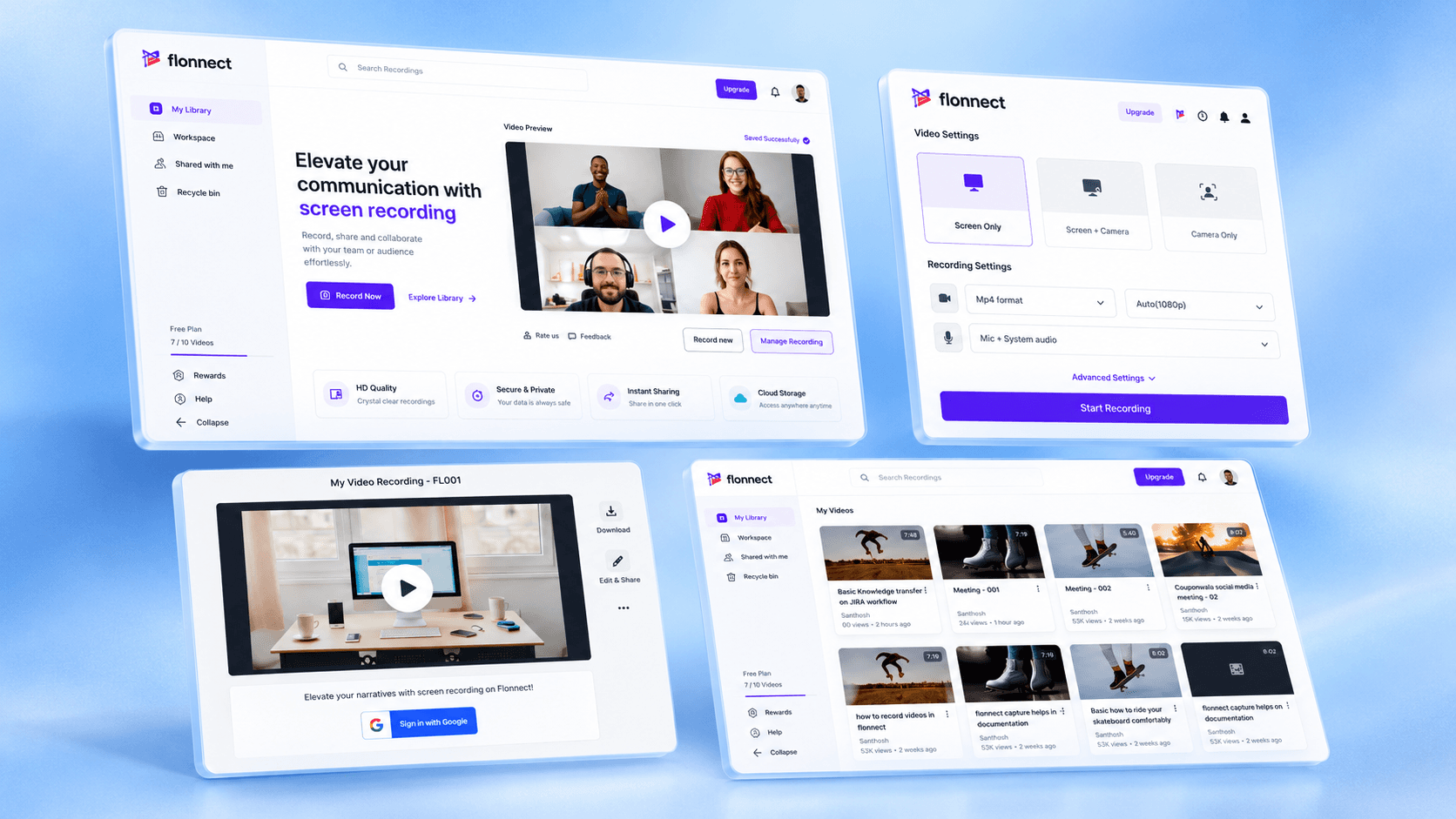
Activation, after redesigning onboarding across AdSpyder and Flonnect. Time to first action down 20%.

Clearer entry pointStart from a goal, not a search box.
No dead endsEvery empty result has a next step.
Agent Hub shippedCampaign optimisation in one place.

This growth isn't credited to the redesign alone. It happened alongside sales calls, outreach and campaigns.

I didn't just redesign AdSpyder's screens. I redesigned how the product responded to user intent.

Resume · Santhosh Kumar Thilagamani